
I feel like we’re on some kind of annoying roller coaster ride. I am in Central Illinois and our weather has been called many things but Bipolar is at the top of the list. Are we wearing our winter coats today or do we need flip flops? Winter coats to head to work/school but then we need the air conditioning when we’re headed home. Because I don’t check the weather hourly I am constantly dressing my children incorrectly for the day. Yep, I’m THAT mom.
So even though I’ve had to drag out my winter coat too often here recently, I am pretty positive that Summer will win out and soon we’ll get to complain about how hot it is. Summer means all kinds of fun things! SO MANY sporting events, camping, playing at the park, fun vacations, amusement parks, water slides, swimming pools, beaches, and everything else fun we can think of to pack into those precious warm months.
The list of items that accompanies us on these sunny adventures is usually long, but one thing that ALWAYS find it’s way into the go-bag is sunscreen (or at least I hope it does). Most of us apply and re-apply sunscreen on the daily, head to toe, at frequent intervals. But do we really know what’s inside that bottle that we are slathering all over us and our children, and sometimes even the children in the near vicinity that aren’t even ours? Let’s discuss!
What’s in there??
I hope you don’t spend your free time reading through the JAMA (Journal of the American Medical Association) but if you do, then you might already know that an article they published in 2019 showed that chemical ingredients from sunscreen were detected in the blood stream after just ONE application. And sometimes, they could be detected for days afterwards. I don’t know about you but I don’t want my sunscreen IN my bloodstream! These chemicals were even detected in women’s breast milk! Go grab your bottle of sunscreen and then read ahead to see if any of the following ingredients are listed.
While there are many offenders that can show up in the sunscreen ingredient list, there are some key players to really watch out for.
The MOST worrisome ingredient commonly found in sunscreen is Oxybenzone (aka benzophenone-3). Oxybenzone is an endocrine disruptor, which means it interferes with your hormones and affects your body’s ability to regulate biological processes. One study found that it can increase the risk of breast cancer and endometriosis. Oxybenzone is also associated with lower testosterone in teenage boys. It is readily absorbed by the skin and is potentially of greater harm to children. If you hit up Google you will see a very large list of reasons to avoid this chemical altogether.
Octinoxate (aka Octyl methoxycinnamate or OMC) is another ingredient to be wary of. This is another endocrine disruptor and has been linked to reproductive toxicity in recent animal studies. It is readily absorbed into the skin and continues to be absorbed after the sunscreen has been applied. It has been found in blood 16 times ABOVE the proposed FDA safety threshold.
Homosalate is linked to both reproductive and developmental toxicity. It is an organic compound that can also cause skin irritation and allergic reactions. While this chemical absorbs UV light to protect your skin from damaging sun rays, a study found that when human breast cancer cells were exposed to homosalate, they grew and multiplied 3.5 times more than normal!! The European Commission found that homosalate was not safe to use at concentrations up to 10 percent and recommended a maximum concentration of 1.4 percent, because of concerns for potential endocrine disruption. The FDA however allows U.S. sunscreen manufacturers to use it in concentrations up to 15 percent!
Parabens and Phthalates. These are just the bad news twins! They are in EVERYTHING and unfortunately are super detrimental to our health. Parabens can disrupt hormone function as well, and has been linked to a higher risk for breast cancer and reproductive toxicity. In 2012, the European Union banned parabens, but they’re still considered legal in the US today. Phthalates are just more endocrine disruptors. They can hide under the guise of “fragrance.” Because fragrance “recipes” are considered proprietary, they are not legally required to be disclosed on labels.
Those are only a few of the chemical ingredients on the list to avoid, and the list is LONG. But did you notice any common themes?? Hormone disruptor, endocrine disruptor, absorbed and retained in the skin, bloodstream and breast milk. These are the things we are applying over and over again to our children and grandchildren!
Now that you know a few things to avoid when picking out your sunscreen, you might be wondering what types of things you should be looking for in a good product.
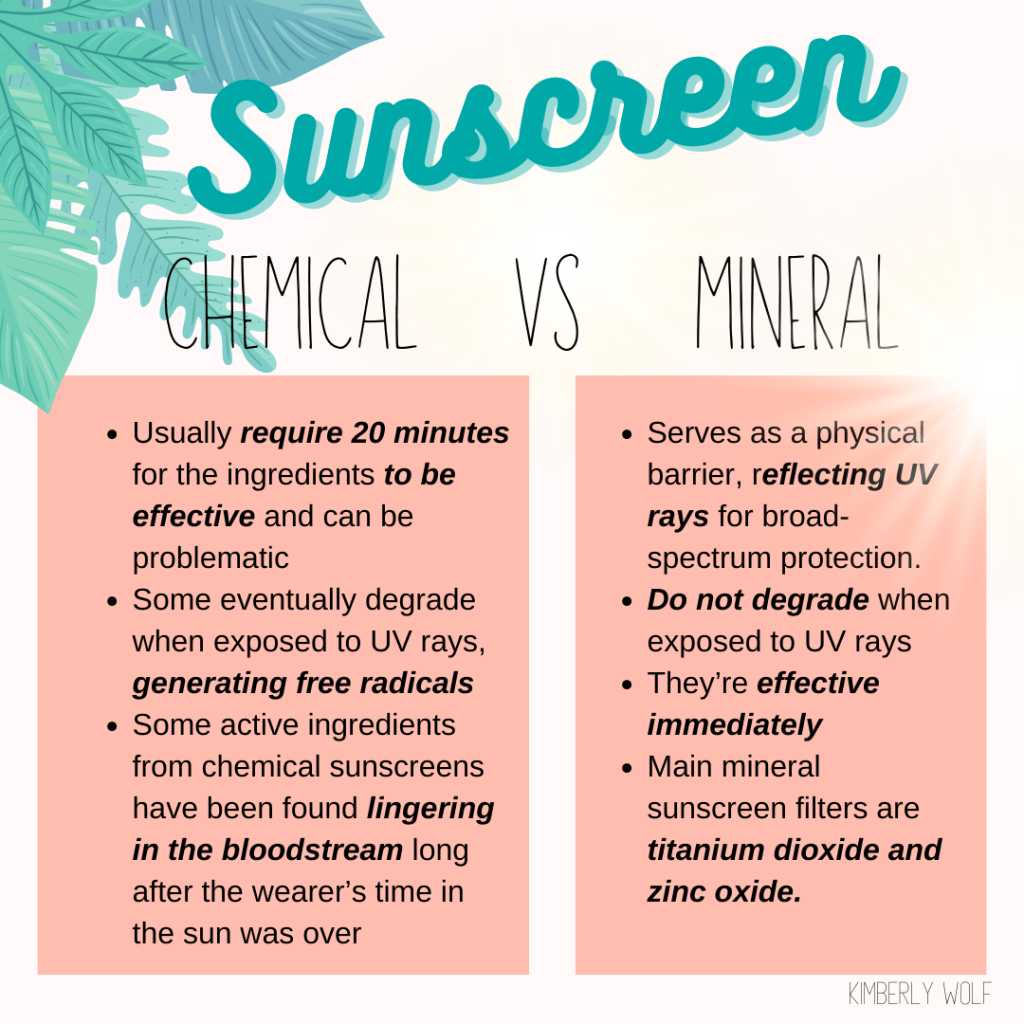
What DO we want??
Broad Spectrum. Look for a sunscreen that is labeled as “Broad Spectrum”. This indicates protection against both UVB and UVA rays. Another thing to keep in mind is that an SPF over 50 is just a gimmick. Studies have shown that SPF over SPF 50 may not offer much additional benefit or protection. It’s more important to look for Broad Spectrum over a higher SPF. An SPF of 30 should be sufficient and should be re applied about ever 2 hours.
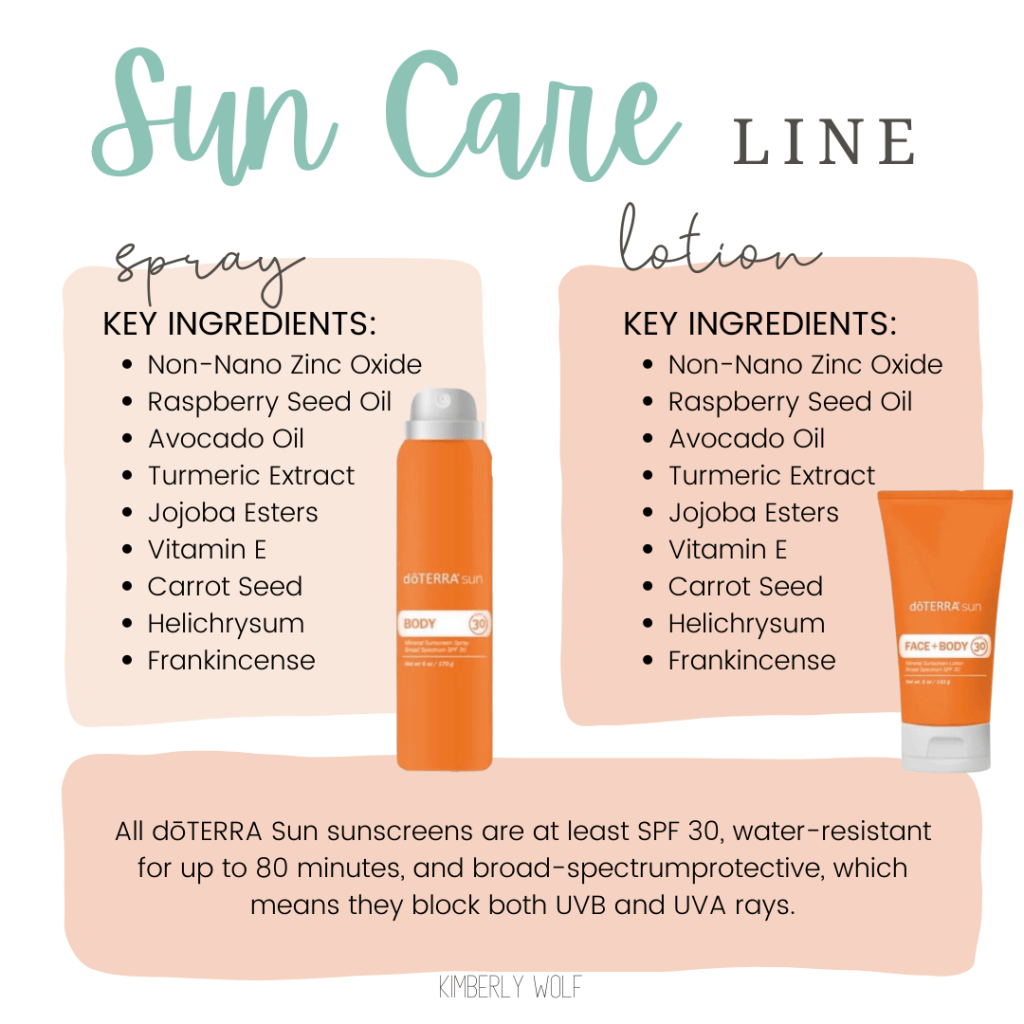
Mineral sunscreen. The most common mineral used in sunscreen is Zinc Oxide. It is incredibly effective at protecting from both UVA and UVB rays. And although Zinc Oxide is found in many “natural” sunscreens you want to specifically look for Non-nano Zinc Oxide. If you aren’t familiar with the term nano, basically it means teeny tiny particles. When it comes to sun protection, the bigger the particle size the better. Why? Because of the way nanoparticles act on your skin. When you apply sunscreen with nano zinc oxide, the super-small particles can penetrate your skin cells and end up in your bloodstream (and even in your lungs). Non-nano particles are too large to be absorbed by your skin, making them safe for the whole family!
Reef Safe. Another consideration when choosing a sunscreen is picking one that is labeled “Reef Safe”. Those nano particles I mentioned earlier are not only easily absorbed by our skin, they are also easily absorbed by the coral reefs, which then end up killing off the reefs. Many of the above listed toxic ingredients are banned by Hawaii and Key West because of how damaging they are to the reefs and marine animals.
Pale, paler palest. I’m the latter.
Now that you know what to look for and what to look for to avoid let me tell about my experiences. My skin tone is likened to that of Casper the friendly Ghost. Remember him? My color goes from ghost to lobster in about 0.3 seconds of direct sunlight. We went to the Bahamas (my first time out of the country and first time going anywhere where the sun seemed to be right on top of us) for our honeymoon. It was wonderful and beautiful, but the first day there we went out to the beach and were only out there for MAYBE 20 mins. You should have seen the looks on the faces of the hotel staff when they saw me in the hours that followed. It was pure pity. Most days I do a decent job of applying sunscreen but not every time.
Since having children I have tried to be responsible and look for healthier options for sunscreen but there just really weren’t any out there so I went ahead and put the “bad” sunscreen on my kids, thinking a sunburn was a greater tragedy. I’ve taken a sunburned kid in to the doctor for their well check and was promptly asked in a condescending tone “do we need to have a chat about sunscreen”. I get it.
Dreams do come true!
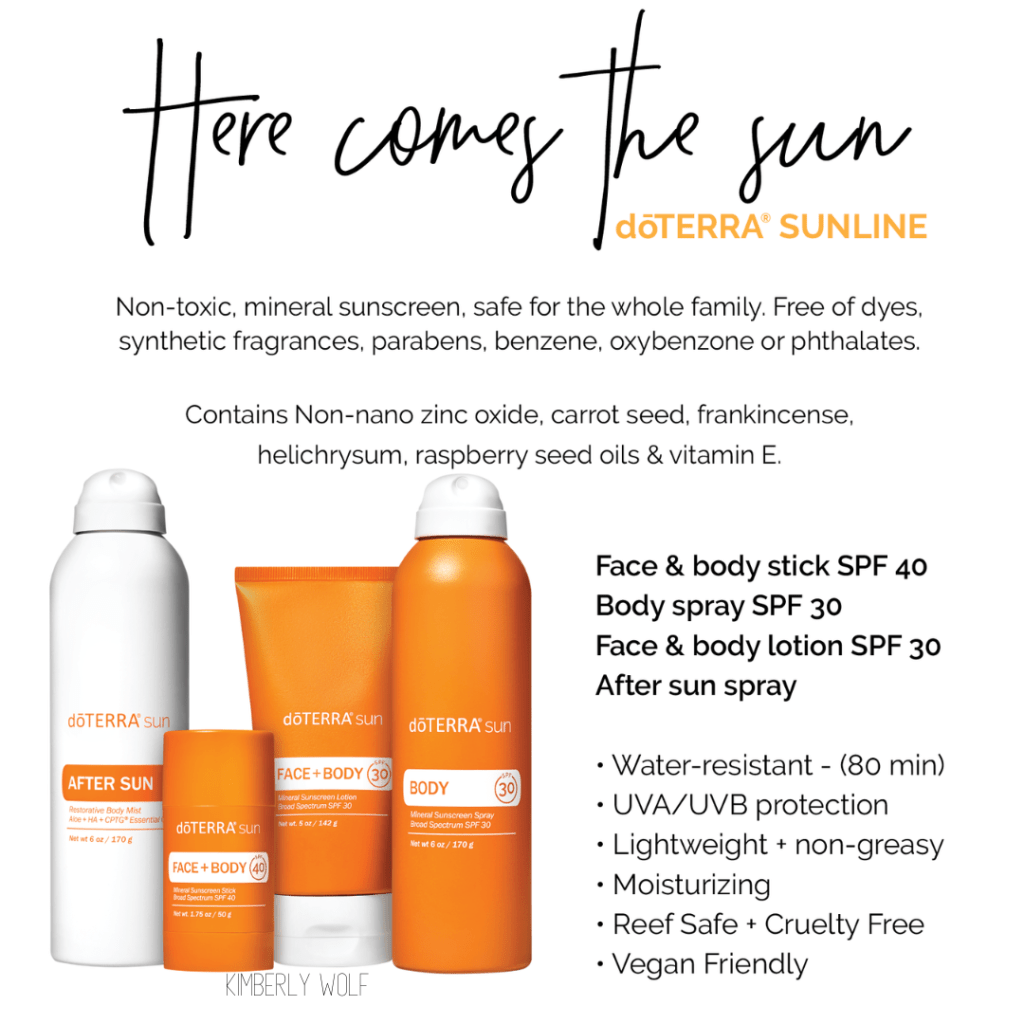
For YEARS we had been asking doTerra to come out with a sunscreen line. The “problem” with doTerra is that they will NEVER release a product unless it meets their impossibly high standards and even though we didn’t know it, they were trying and trying to find a formula for a sunscreen that met their specific criteria and was effective. FINALLY the day came and they announced the new doTerra Sun line, which now includes five awesome products! I was ecstatic! But I still had concerns. Would they work even on me, the ghost? Would they go on like a white thick paste like many of the “natural” sunscreens I had tried over the years?
The answer that first question came when I took the doTerra Sun products to the Dominican Republic with us on vacation. We were out on the beach for HOURS each day. We did lounge under the huts for part of the time, but if you’ve ever lounged under a tiki hut you know that the sun finds it’s way through the cracks and crevices and around the edges of the roof and will sneak attack you with a bad sunburn. I didn’t burn at all the ENTIRE WEEK we were there!
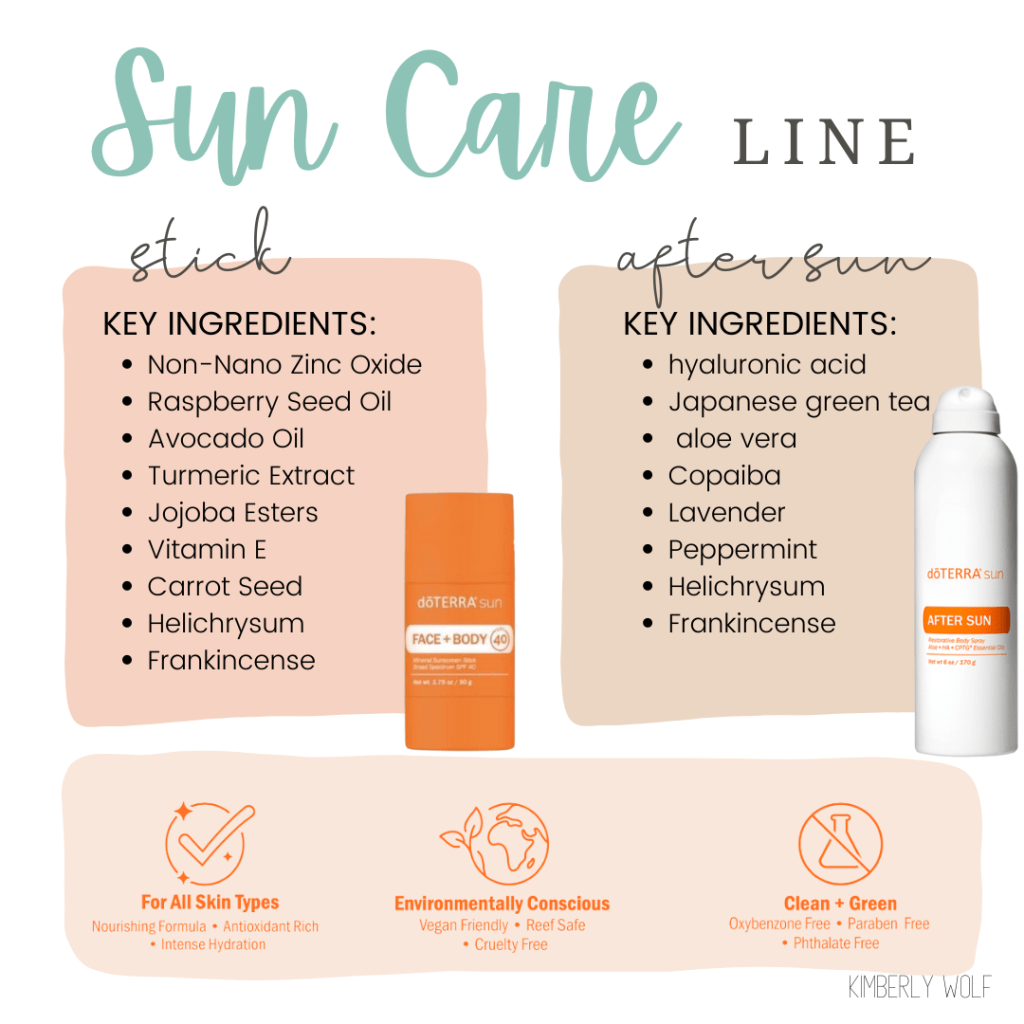
As for the second question…..The doTerra Sun lines includes a face and body stick, face and body lotion and a body mineral sunscreen spray (non aerosal so it’s still safe for the environment). Full disclosure, I tend to use too much lotion when applying so the lotion did go on a little thick, but it rubs in nicely and doesn’t leave you looking like you have whiteout all over your body. I honestly had my doubts about the spray, but it worked REALLY well also.
There is also an Aftersun spray available, which is great to spray on after you’ve been in the sun or if you find yourself with a sunburn. All of the products have ingredients that are super nourishing and hydrating for the skin, as well as several CPTG essential oils which were chosen specifically because they are so good for the skin.
Simple changes
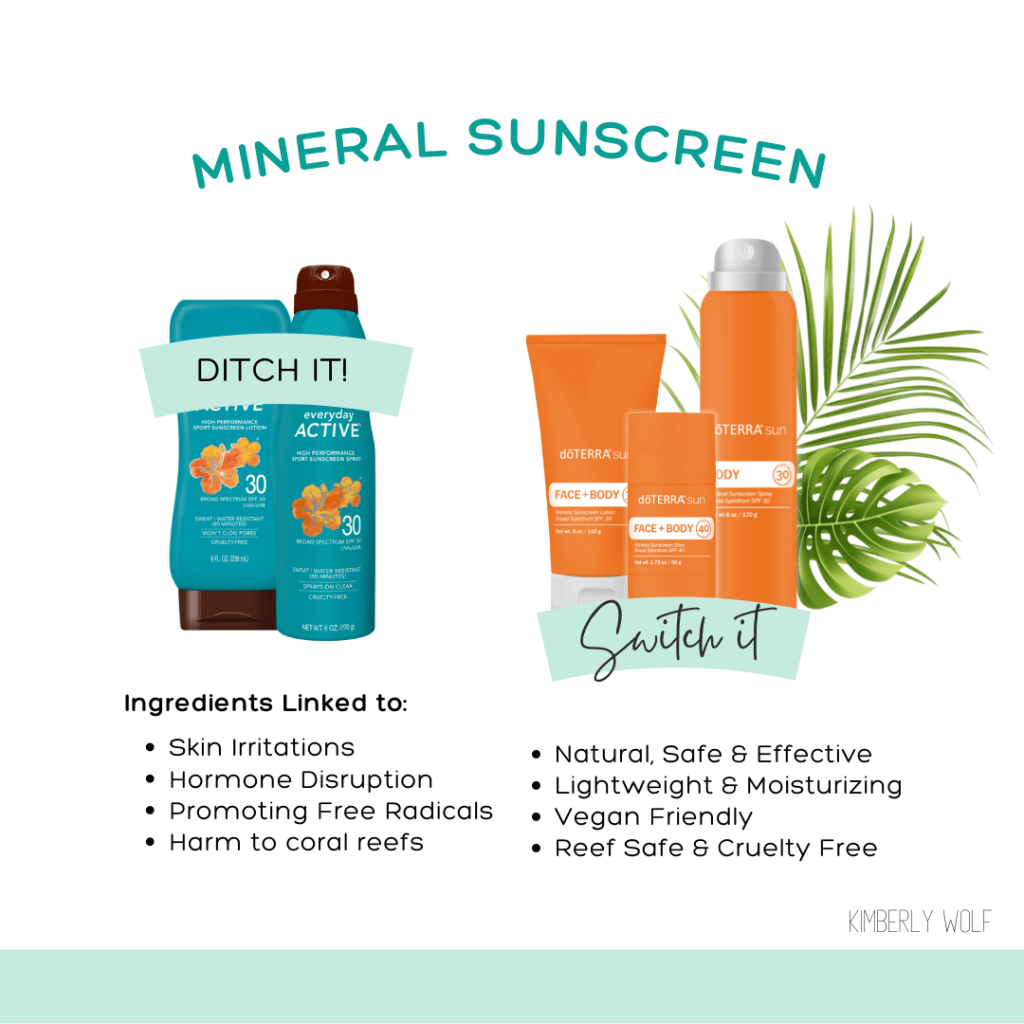
I’ll admit, it’s easy and convenient to run to the store and grab a sunscreen off the shelf and throw in your go-bag. And truthfully, you probably won’t notice any ill effects from it after you apply it. The problem is not what it’s doing to you on the outside, the problem is what it’s doing to you on the inside, day after day. If you can make one simple swap and avoid words like endocrine disruption, hormone disruption and worse, isn’t it worth it? Make these simple swaps for yourself and especially for your children/grandchildren. We now ONLY use the doTerra Sun line and I can confidently say that I am choosing the best option for my family.
If you want to learn how to order these sun products at the cheapest price you can contact me at kimberlywolf@simpleandnaturalfamilyhealth.com and I will be happy to get your nontoxic sunscreen to you as soon as possible so you have it for all your summer fun.
If you haven’t already done so, be sure and get my FREE guide for 7 simple swaps for a toxin free home. You’ll also be added to my email list to receive upcoming articles! You can also check out past articles at my website Simple and Natural Family Health.
 Simple & Natural Family Health